Why a healed bone still needs rehab
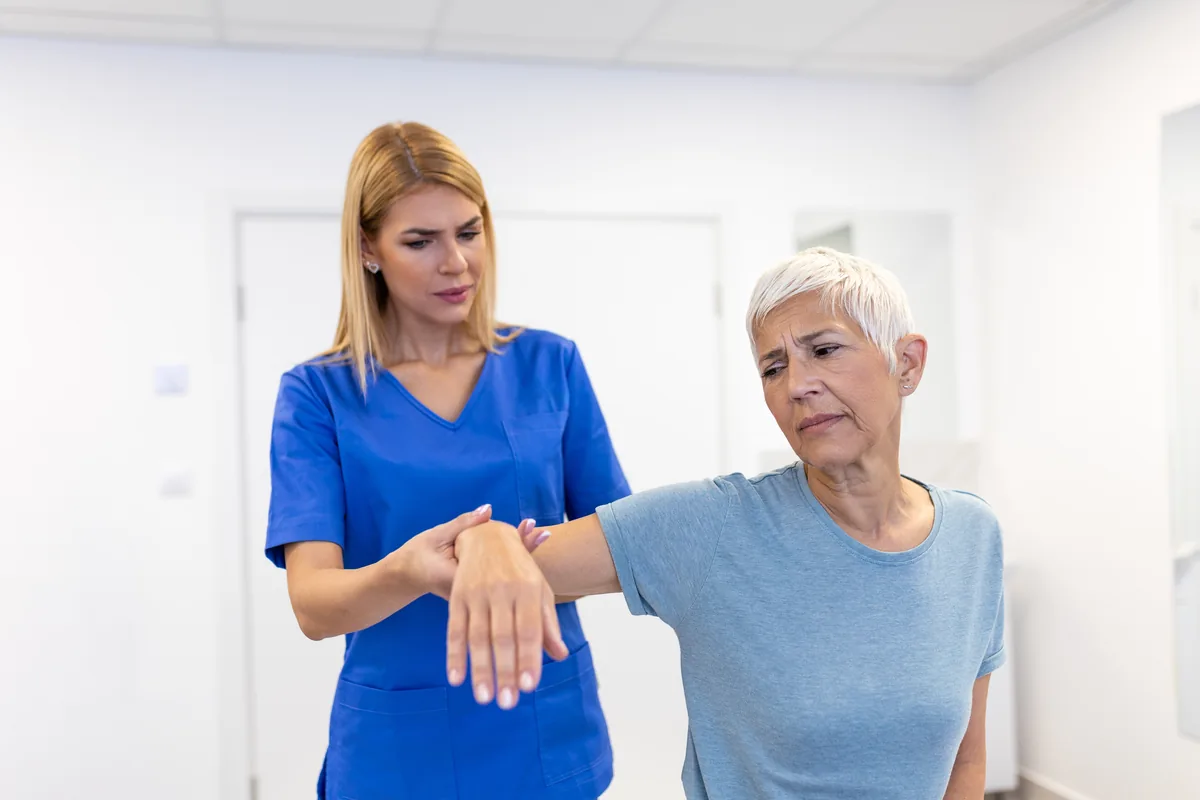
A cast, sling or boot protects a healing bone, but the joints around it get stiff and the muscles weak (ChoosePT) (ChoosePT). Almost everyone has some wrist stiffness after a broken wrist. It usually eases in the month or two after the cast comes off or after surgery, and keeps getting better for at least 2 years (AAOS OrthoInfo). After a broken ankle, many people have stiffness and swelling for months, even after the bone has healed (AAOS OrthoInfo). Recovery depends on the type of break, how it was treated and your general health (AAOS OrthoInfo), so your plan is built around your surgeon’s orders and your goals.
Fractures we commonly treat
Broken wrist (distal radius fracture)
This break of the radius near the wrist is very common: about 1 in 6 broken bones treated in U.S. emergency rooms. In older adults with osteoporosis, a simple fall onto the wrist can cause it (AAOS OrthoInfo).
- In the cast. Start moving your fingers as soon as you can after casting or surgery, and tell your doctor if pain or swelling keeps you from fully moving them within 24 hours (AAOS OrthoInfo). Gentle exercises keep your shoulder and elbow moving, as your doctor allows (ChoosePT).
- After the cast. If you did not need surgery, the cast usually comes off 4 to 6 weeks after the injury, and therapy often starts then (AAOS OrthoInfo). Treatment may include hands-on therapy for stiffness, motion exercises, then strengthening once the bone has healed (ChoosePT).
A guideline from the AAOS and the American Society for Surgery of the Hand found that for adults 65 and older, surgery does not give better long-term results than non-surgical care. It found mixed evidence on whether supervised therapy beats a home program (AAOS/ASSH guideline). So a good home program is the center of your plan, and we see you as often as your recovery needs. Track progress with our Upper Extremity Functional Index and wrist and hand range-of-motion norms.
Broken shoulder (proximal humerus fracture)
A break at the top of the upper arm bone is a common shoulder fracture, often from a fall. Most can be treated without surgery if the pieces are not badly out of place. After a period in a sling, shoulder exercises, usually in supervised physical therapy, ease stiffness and rebuild motion and strength. If the injury was not severe, most people improve quickly after the first 4 to 6 weeks, and gains often continue for up to 12 months (AAOS OrthoInfo). See our shoulder pain page and shoulder range-of-motion norms.
Broken ankle
Ankle fractures are the fourth most common fracture in adults. Most take at least 6 weeks for early healing and 10 to 12 weeks to heal completely (AAOS OrthoInfo). While you cannot put weight on the leg, we teach you to use crutches or a walker, stairs and car transfers. Once your doctor clears you, we help you slowly add weight and work on walking, swelling, motion, strength and balance (ChoosePT). Most people return to normal activities 3 to 4 months after the injury, and full recovery from some ankle fractures can take up to 2 years (AAOS OrthoInfo). Useful tools: the Lower Extremity Functional Scale and ankle and foot range-of-motion norms.
Not sure if a fresh ankle or foot injury is broken? Get it checked soon to tell a bad sprain from a break (ChoosePT), and try our free Do I Need an X-Ray? Fresh Injury Check, based on the Ottawa Ankle Rules.
Hip fracture
More than 300,000 people in the U.S. break a hip each year, mostly adults 65 and older who fall. Most need surgery and start physical therapy the day after; moving early helps prevent blood clots, pneumonia and bed sores. Physical and occupational therapists teach exercises, safe weight-bearing, bathing and dressing. If you go straight home, in-home physical therapy comes first, until you are strong enough for an outpatient clinic (AAOS OrthoInfo). Our in-home therapy team visits many North Jersey towns.
Weight-bearing: follow your surgeon’s orders
How much weight a healing leg can take is your surgeon’s call, and weak bone can mean extra limits (AAOS OrthoInfo). With a broken ankle, weight too early can let the pieces shift so the bone heals wrong or not at all (AAOS OrthoInfo). We follow your orders exactly and progress you only when your doctor clears you (ChoosePT).
AlterG® anti-gravity treadmill (Fair Lawn). It takes part of your body weight off your legs so you can practice walking, and later jogging, earlier in recovery, as your therapist and surgeon allow. Ask about it at our Fair Lawn clinic.
Easing stiffness and swelling
- At home: raise a swollen hand above your heart and use ice wrapped in a towel (AAOS OrthoInfo); raise a swollen ankle when you rest (AAOS OrthoInfo).
- In therapy: warm or cold treatments, gentle electrical stimulation and hands-on techniques for pain, swelling and stiffness (ChoosePT), plus massage and compression wraps for the ankle (ChoosePT).
When to call your doctor or go to the ER
- Your fingers feel numb or look pale after a wrist injury (AAOS OrthoInfo).
- Severe pain that does not get better or gets worse, severe pain when someone gently straightens your fingers, or new weakness bending your thumb or index finger (AAOS OrthoInfo).
- A bone is pushing through the skin (ChoosePT).
Also tell your doctor about severe, ongoing pain that does not get better with medicine. It can be a sign of complex regional pain syndrome, which needs treatment (AAOS OrthoInfo).
Hand therapy for wrist and hand fractures
Therapy can help you manage daily tasks like dressing, cooking and computer work, even while you are in a cast (ChoosePT). Our occupational therapists include two Certified Hand Therapists (CHT): therapists with at least 3 years and 4,000 hours in hand therapy who passed an advanced exam and recertify every 5 years (HTCC).
- Joann Marquez, OT, CHT (CHT since 2007), at our Maplewood and South Orange clinics; her expertise includes custom splinting.
- Brandon Gorny, MSOT, OTR/L, CHT (CHT since 2023), at our Rahway clinic; he treats shoulder, elbow, wrist and hand conditions, including after surgery.
Our other therapists also treat wrist and hand fractures, and occupational therapy is available at our New Jersey clinics. Read What Is Hand Therapy? How a Certified Hand Therapist Can Help.
Bone health and preventing the next fracture
A bone that breaks in a fall from standing height (a fragility fracture) is often the first sign of weak bones. It roughly doubles your risk of another fracture, highest in the first 1 to 2 years. Treating low bone density early can cut that risk by 50% or more, so ask your doctor about a bone density (DEXA) test (AAOS OrthoInfo). About 1 in 2 women and up to 1 in 4 men age 50 and older will break a bone because of osteoporosis (Bone Health & Osteoporosis Foundation).
- Exercise that builds bone. Walking and strength work with bands, weights or sit-to-stands help keep bones strong, though after an osteoporosis fracture you may need to avoid high-impact exercise (Bone Health & Osteoporosis Foundation). A physical therapist checks your strength, balance and posture and builds a safe plan (ChoosePT).
- Calcium, vitamin D and staying active. These help keep bones strong, as do quitting smoking and limiting alcohol (NIH) (NIH).
- Fall prevention. More than 1 in 4 adults 65 and older fall each year; exercise, a medicine review, a vision check and a safer home prevent many falls (NIH).
Our fall prevention program includes:
- No Fall Protocol® and HolStep®. Our fall-risk assessment and leveled home exercise program, so practice continues between visits.
- Overhead safety harness (all New Jersey clinics and Bronx Morris Park) for safe walking and balance practice.
- Free self-checks. Try the fall risk self-check, 30-second chair stand, Timed Up and Go and home fall-hazard checklist.
Insurance and getting started
At our New Jersey clinics, we accept Medicare, Medicare Advantage plans including Clover Health and UnitedHealthcare Medicare Complete, commercial insurance, workers’ compensation, auto/no-fault, VA Community Care and private pay, and we verify your coverage for free before your first visit. See our insurance page for details.
Medicare Part B helps pay for medically necessary outpatient physical therapy and occupational therapy. After the Part B deductible, you usually pay 20% of the Medicare-approved amount, and there is no yearly limit on medically necessary outpatient therapy (Medicare.gov) (Medicare.gov).
In New Jersey you can start physical therapy without a prescription. Within 30 days of your first treatment, we send a written consult to the health care provider you choose. Some insurance plans still require a referral, and Medicare requires your plan of care to be signed by your doctor, nurse practitioner or physician assistant; we coordinate both and tell you what your plan needs. Rules differ in New York, so call us and we will explain what applies to you.
Most New Jersey patients are seen the same day or within 24 hours; our New York City clinics (Bronx, Bronx Morris Park and Brooklyn) and in-home therapy offer same-week appointments.
Related conditions we treat: shoulder pain, knee pain, back pain and car accident injuries.
Find a clinic near you
We provide fracture physical therapy at all 16 open Holsman clinics across Essex, Bergen, Passaic, Hudson and Union counties, the Bronx and Brooklyn, and with in-home therapy across North Jersey. (Our Clifton Route 3 clinic is temporarily closed.)
Related reading: What Is Hand Therapy? · Why Seniors Fall and How to Prevent It · In-Home Physical Therapy: What to Expect