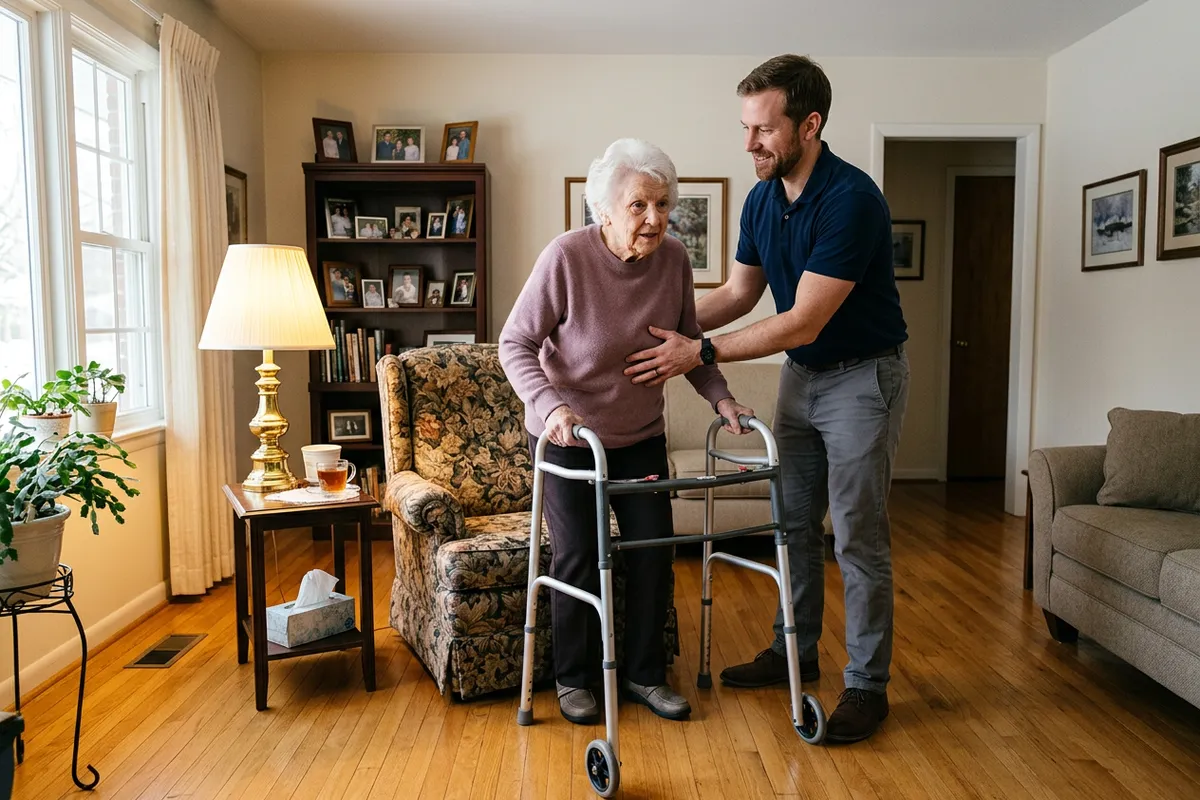
In-home physical therapy brings the evaluation, exercise and fall-prevention work of a clinic to your living room. Here is what happens at the first visit, what the home safety check covers, what equipment you might need, and how often your therapist will come.
For many people, getting to a clinic two or three times a week after surgery, a hospital stay or a fall is the hardest part of therapy. In-home physical therapy brings a licensed therapist to your door.
Who In-Home Physical Therapy Is For
In-home PT is a good fit if you:
- Are recovering from a knee or hip replacement, spine surgery or another operation
- Had a stroke or live with Parkinson’s disease, MS or another neurologic condition
- Have fallen, nearly fallen, or feel unsteady at home
- Recently came home from the hospital or a rehab facility
- Don’t drive, or traveling to a clinic leaves you too tired to exercise
Falls are a big reason families call. More than one in four people age 65 and older fall each year (National Institute on Aging).
Before the First Visit
When you call 862-250-6697 or send the form on this page, our team asks about your diagnosis, your town and your insurance, then checks your benefits at no charge before scheduling. To be ready for the first visit, have these nearby:
- Your insurance cards and photo ID
- A list of your medicines, or the bottles
- Hospital discharge papers or your surgeon’s instructions, if you have them
- Any walker, cane, brace or shoes you normally use
- Your glasses and hearing aids
Wear comfortable clothes you can move in. A family member or caregiver is welcome to join, and it often helps.
The First Visit: Evaluation and Home Safety Check
The first visit is usually the longest. Your therapist will:
- Talk with you about your health, your surgery or diagnosis, pain, falls and what you want to be able to do again, such as walking to the mailbox or getting in and out of the shower.
- Check vital signs such as blood pressure and heart rate.
- Test how you move: strength, joint motion, getting up from a chair and bed, walking, stairs and balance. Many of these are standardized tests, like the Timed Up and Go and the 30-Second Chair Stand, so progress can be measured.
- Walk through your home to look for fall hazards and harder spots, such as the tub, stairs and the path to the bathroom at night.
- Set goals and a plan of care with you, then start a few exercises right away.
What the home safety check looks for
Common changes recommended for preventing falls at home include (MedlinePlus):
- Removing loose throw rugs and cords from walkways, and fixing uneven flooring in doorways
- Good lighting, especially from the bedroom to the bathroom and on stairs
- Grab bars in the tub or shower and next to the toilet, plus a non-slip mat
- Moving everyday items within easy reach so you don’t need step stools
- A bed low enough that your feet touch the floor when you sit on the edge
- Keeping a phone with you
Occupational therapy can go further with bathing, dressing, kitchen tasks and equipment such as shower chairs (AOTA).
Equipment You Might Need
Your therapist will tell you whether a cane, walker, shower chair, raised toilet seat or grab bars would help, and will make sure a walker or cane is the right type and height and that you use it safely. MedlinePlus suggests asking about a cane or walker, and notes that a walker with a seat lets you rest while walking (MedlinePlus). Most home exercises need little equipment: a sturdy chair, a counter to hold on to, and sometimes resistance bands or light ankle weights, which your therapist can bring or recommend.
Ongoing Visits: What a Session Looks Like
Follow-up visits focus on practicing the things that matter in your own space: getting up from your favorite chair, walking to the kitchen, managing your steps, and getting in and out of the car. A typical session includes a quick check-in and vital signs, strength and balance exercise, walking practice, and an update to your home program. Exercise programs built around balance and functional exercises reduce the rate of falls in older adults living in the community, according to a large Cochrane review (Cochrane, 2019). Our No Fall Protocol® fall prevention program can be delivered at home.
How Often, and for How Long?
There is no one schedule. Your therapist recommends how many visits a week and for how many weeks based on your evaluation, your goals and your insurance, and the plan is reviewed as you improve. Many people move on to outpatient therapy at a clinic once they can travel comfortably. Between visits, doing your home exercises is what keeps progress going.
When to Call 911 or Your Doctor
Your therapist checks how you are doing at every visit, but call for help right away if something changes.
- Call 911 for chest pain or pressure, sudden shortness of breath, sudden face drooping, arm weakness or trouble speaking, or a fall with a head injury or that leaves you unable to get up.
- Call your doctor after any fall or near fall, as MedlinePlus advises, and if your eyesight has worsened (MedlinePlus).
- Call your surgeon or doctor for new calf pain, warmth or swelling, fever, or a surgical wound that is red or draining.
In-Home Therapy With Holsman
New Jersey: our house-call team provides in-home physical therapy, occupational therapy and speech therapy across Bergen, Essex, Passaic, Hudson and Union counties, including Kearny, North Arlington, Lyndhurst and Rutherford, plus in-home PT in Parsippany, Morristown and East Hanover. Same-week home visits are available. See all towns we visit.
New York: in Rockland County, in-home therapy is provided by our sister company, Home Therapy PT.
Referral and insurance: in New Jersey you don’t need a referral to start physical therapy. Within 30 days of your first treatment, we send a written consultation to the health care professional you choose. For Medicare, your physician or nurse practitioner signs your plan of care, and we coordinate that for you. Some insurance plans have their own referral rules, so we verify your coverage at no charge before your first visit. For how Medicare handles therapy at home, read Does Medicare Cover In-Home Physical Therapy in NJ?
Call our in-home line at 862-250-6697 or request a visit with the form on this page.
Frequently Asked Questions
What happens at the first in-home physical therapy visit?
Your therapist reviews your health and goals, checks vital signs, tests strength, balance, walking and getting up from a chair or bed, walks through your home to look for fall hazards, and sets a plan of care with you. Most people also learn a few exercises at the first visit.
What should I have ready for an in-home PT visit?
Have your insurance cards and photo ID, a list of your medicines, any hospital discharge papers or surgeon's instructions, and any walker, cane, brace or shoes you normally use. Wear comfortable clothes, and invite a family member if you like.
How often will the therapist come to my home?
It depends on your evaluation, goals and insurance. Your therapist recommends a schedule and reviews it as you improve. Many people move on to clinic visits once they can travel comfortably.
Is in-home physical therapy available near me?
Holsman provides in-home therapy across Bergen, Essex, Passaic, Hudson and Union counties in New Jersey, including Kearny, North Arlington, Lyndhurst and Rutherford, and in-home PT in Parsippany, Morristown and East Hanover. In Rockland County, NY, our sister company Home Therapy PT provides in-home therapy. Call 862-250-6697.
Do I need a referral for in-home physical therapy in New Jersey?
No referral is needed to start physical therapy in New Jersey. Within 30 days of your first treatment we send a written consultation to the health care professional you choose. For Medicare, your physician or nurse practitioner signs your plan of care, and we coordinate that. Some insurance plans have their own referral rules, so we verify your coverage at no charge.
Sources
- National Institute on Aging (NIH). Falls and Fractures in Older Adults: Causes and Prevention. Accessed November 2026.
- MedlinePlus Medical Encyclopedia, U.S. National Library of Medicine. Preventing falls. Accessed November 2026.
- Sherrington C, Fairhall NJ, Wallbank GK, et al. Exercise for preventing falls in older people living in the community. Cochrane Database of Systematic Reviews. 2019;1:CD012424. doi:10.1002/14651858.CD012424.pub2. Accessed November 2026.
- American Occupational Therapy Association (AOTA). What is occupational therapy?. Accessed November 2026.
This article is for general education and isn't a substitute for an evaluation by a licensed clinician.