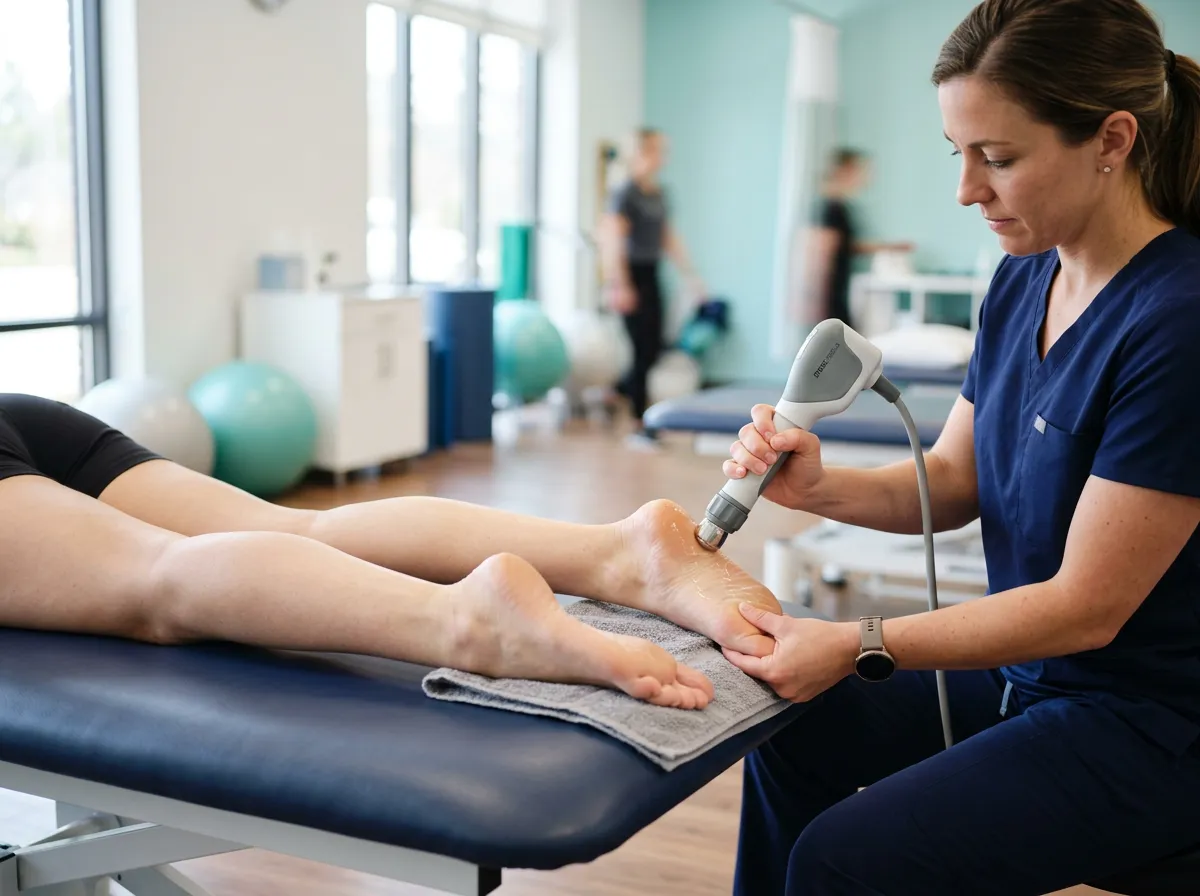
Looking for shockwave therapy near you? Holsman Physical Therapy offers shockwave therapy at all 17 of our clinics, including E. 180th St. in the Bronx, Morris Park in the Bronx and Brooklyn, plus 14 clinics in New Jersey. It is always given by our physical therapy team as one part of a full treatment plan, after an evaluation to make sure it’s right for you.
What Is Shockwave Therapy?
Shockwave therapy, or extracorporeal shockwave therapy (ESWT), uses a handheld applicator to send strong sound-wave pulses through the skin into a painful tendon, ligament or muscle. These pulses increase blood flow, can help break up calcium deposits, and can reduce pain signals, which helps tissue that has been slow to heal start repairing itself.
There are no needles, no injections and no incisions. A small amount of gel is placed on the skin, and the treatment itself usually takes only a few minutes.
Conditions Shockwave Therapy Can Help
Shockwave therapy is mainly used for long-lasting tendon and soft-tissue pain, especially when rest, stretching or other treatment hasn’t been enough. Common examples include:
- Plantar fasciitis and heel pain
- Achilles tendon pain
- Tennis elbow and golfer’s elbow
- Jumper’s knee (patellar tendon pain)
- Shoulder tendon pain, including calcific tendinitis
- Outer hip pain (greater trochanteric pain)
- Shin splints
- Stubborn muscle knots and trigger points
Always Part of Your Physical Therapy
Shockwave therapy works best alongside the right exercise. It can ease pain and jump-start healing, and strengthening and better movement help keep the problem from coming back. That’s why at Holsman it’s always one part of your physical therapy or sports physical therapy plan.
What a Shockwave Session Feels Like
- Evaluation first. Your physical therapist examines the painful area, reviews your health history and checks that shockwave therapy is safe and a good fit for you.
- Gel and positioning. You sit or lie comfortably and a small amount of gel is put on the skin over the sore spot.
- Treatment. The applicator delivers rapid pulses that feel like strong tapping. Your therapist adjusts the strength to what you can tolerate. The pulses usually last only a few minutes.
- Exercise. Your therapist then guides you through exercises to strengthen and load the area, often in the same visit.
- Afterward. Mild soreness or redness for a day or two is common. Most people go right back to normal daily activity. A typical course is 3 to 5 sessions about a week apart.
Is Shockwave Therapy Safe?
Shockwave therapy is non-invasive and side effects are usually mild, such as short-term soreness, redness or bruising. Tell your therapist before treatment if you:
- Are pregnant or may be pregnant
- Take blood thinners or have a bleeding disorder
- Have cancer, an infection or a skin problem in the area
- Have a pacemaker or other implanted device
- Had a steroid injection in the area recently
If shockwave therapy isn’t right for you, your therapist will use other treatments to reach the same goals.
Shockwave Therapy for Workers’ Comp and Auto Accident Injuries
Work and car accident injuries often leave lingering tendon pain, like a sore heel from long shifts on your feet, an elbow strained by lifting or tools, or a shoulder that hasn’t recovered. Shockwave therapy, combined with physical therapy, can help you get back to work and daily life.
- Workers’ compensation: we treat work-injury patients in New York and New Jersey, including FECA federal workers’ comp. Our staff helps with the claim details and any authorization your case needs.
- Auto accidents (no-fault): we work with no-fault auto claims in New York and New Jersey and will verify what your policy covers before treatment.
- Bronx and Brooklyn: shockwave therapy is available at all three of our NYC clinics, with same-week appointments.
Bring your claim number and adjuster’s contact information to your first visit if you have them. Read more about physical therapy for workers’ comp injuries.
Insurance and Cost
Coverage for shockwave therapy depends on your plan. Many health plans, including Medicare, do not cover it, while some auto (no-fault) and workers’ compensation claims may. A self-pay option is available. Our staff will check your benefits and explain any out-of-pocket cost before treatment. See our insurance page for plans we accept.