Every child develops at their own pace, but some signs are worth checking. Here is what to watch for, from infancy through the school years.
Every child grows and learns at their own pace. Still, many parents have a moment of worry: Should my baby be sitting by now? Why does my toddler walk on his toes? Why is handwriting so hard for my daughter?
Trust that instinct. Getting a question answered early is always better than waiting. This guide covers common signs that a child may benefit from pediatric therapy.
Physical Therapy vs. Occupational Therapy for Kids
- Pediatric physical therapy (PT) focuses on gross motor skills: rolling, sitting, crawling, walking, running, jumping, balance, strength, and coordination.
- Pediatric occupational therapy (OT) focuses on fine motor and daily living skills: grasping, feeding, dressing, handwriting, play, and how a child processes touch, sound, and movement.
Many children benefit from both. A therapist can help you sort out what your child needs. For a closer look at OT, see 10 signs your child may benefit from occupational therapy.
Motor Milestones to Watch
The CDC's "Learn the Signs. Act Early." program lists milestones most children reach by certain ages. Talk with your pediatrician if your child is not:
- By 4 months: holding their head steady without support when you hold them
- By 6 months: rolling from tummy to back, and pushing up on straight arms during tummy time
- By 9 months: sitting without support
- By 15 months: taking a few steps on their own
- By 18 months: walking without holding on to anyone or anything
- By 2 years: kicking a ball and running
Milestones are a guide, not a test. But if your child is behind, or seems to lose skills they had, check in.
Signs a Baby May Need PT
- Always turns their head to one side, or has a tight neck (possible torticollis)
- A flat spot on one side or the back of the head
- Feels very stiff or very floppy when you pick them up
- Uses one side of the body much more than the other
- Strongly dislikes tummy time or cannot lift their head during it
Signs a Toddler or Child May Need PT
- Walks on their toes most of the time after age 2
- Trips and falls much more than other children their age
- Has trouble with stairs, jumping, or keeping up on the playground
- Gets tired quickly during physical play
- Walks with feet turned in or out in a way that seems to cause problems
- Has pain, or recently had an injury or surgery
Signs a Child May Need OT
- Trouble holding a spoon, crayon, or pencil the way other kids their age do
- Very messy or slow handwriting that causes frustration
- Struggles with buttons, zippers, or shoelaces at an age when peers can manage them
- Very picky eating, gagging on certain textures, or trouble chewing
- Strong reactions to clothing tags, loud noises, messy hands, or haircuts
- Seeks constant movement, crashing, or spinning, or avoids swings and playground equipment
- Has trouble sitting still or paying attention because of how their body feels
What Happens at a Pediatric Evaluation
A pediatric evaluation is play-based. Your therapist will talk with you about your concerns and your child's history, then watch and play with your child to see how they move, reach, balance, and handle tasks. Standardized tests compare your child's skills with typical development for their age.
You leave with clear answers, a plan if therapy is recommended, and simple activities to do at home.
Early Intervention for Children Under 3
In New Jersey, children under age 3 with developmental concerns may qualify for the state's Early Intervention System (NJEIS), which provides evaluations at no cost to families. Your pediatrician can help with a referral, or you can contact NJEIS directly. Families can also choose a private evaluation with a pediatric therapist.
How Parents Can Help Every Day
- Give babies plenty of supervised tummy time while awake
- Limit time in car seats, swings, and bouncers outside of travel
- Encourage play that uses both sides of the body, like crawling through tunnels or catching a ball
- Offer crayons, playdough, puzzles, and building blocks for hand skills
- Celebrate effort, not just success
Holsman Children's Therapy Center
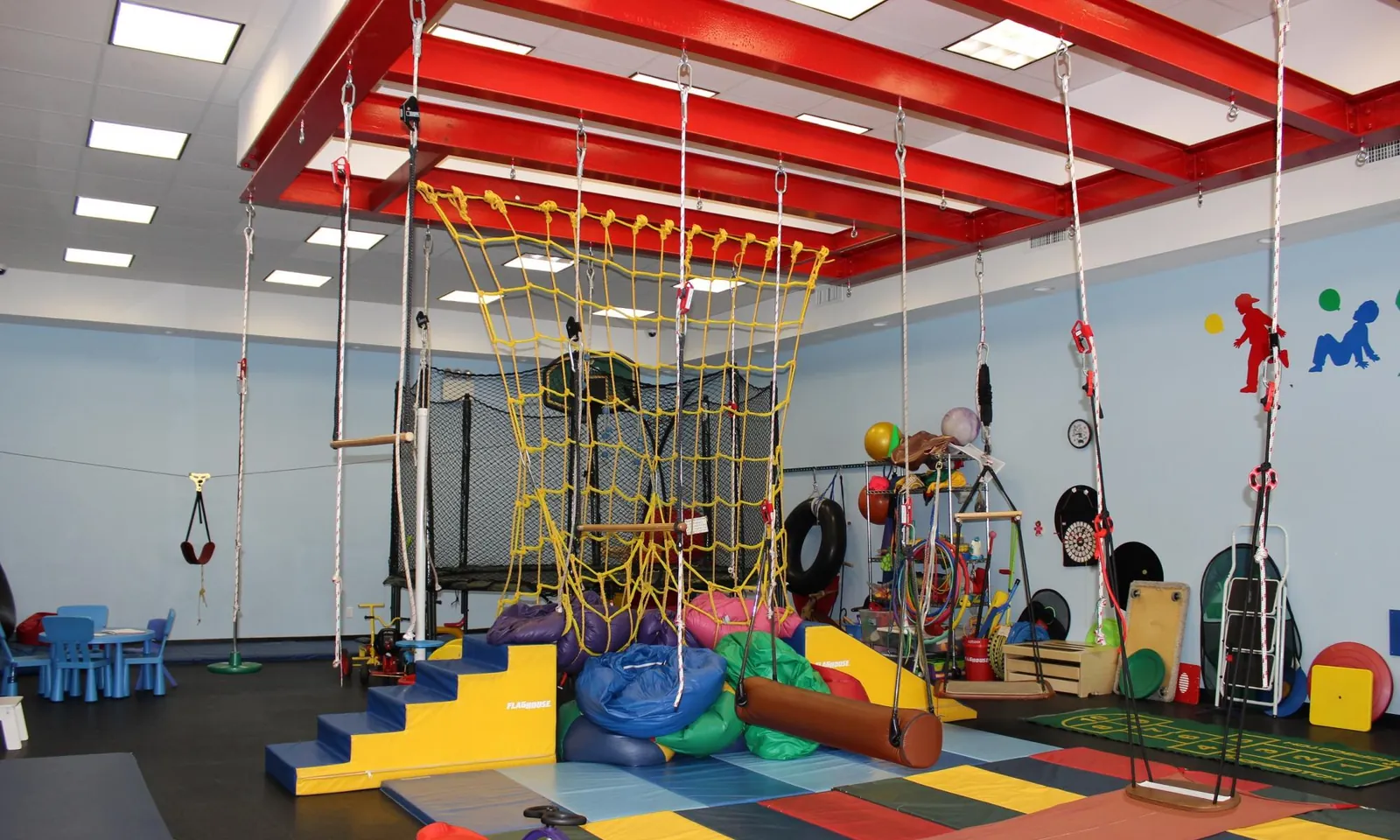
Holsman Children's Therapy Center in Fair Lawn provides physical, occupational, and speech therapy for children from birth to age 21, in a space designed for kids.
Holsman Children's Therapy Center
15-01 Broadway, Suite 14C, Fair Lawn, NJ
Phone: 201-351-1682
Call to schedule an evaluation and to check your insurance coverage. See our insurance page for more information.
Frequently Asked Questions
When should I worry about my baby's motor development?
Talk with your pediatrician if your baby misses milestones such as holding their head steady by 4 months, sitting without support by 9 months, or walking by 18 months, or if they lose skills they had before.
Is toe walking normal in toddlers?
Toe walking is common when children first learn to walk. If it continues most of the time after age 2, or your child cannot stand flat-footed, have it checked by a pediatrician or physical therapist.
What is the difference between pediatric PT and OT?
Physical therapy focuses on large movements like sitting, walking, and balance. Occupational therapy focuses on hand skills, feeding, dressing, handwriting, and how a child processes sensory input.
Do I need a referral for pediatric therapy?
In New Jersey, you can start physical therapy without a referral, but many insurance plans require a prescription from your child's doctor for coverage. Our staff will check your plan.
What ages does Holsman Children's Therapy Center treat?
We treat children from birth through age 21 at our Fair Lawn center.
This article is for general education and isn't a substitute for an evaluation by a licensed clinician.