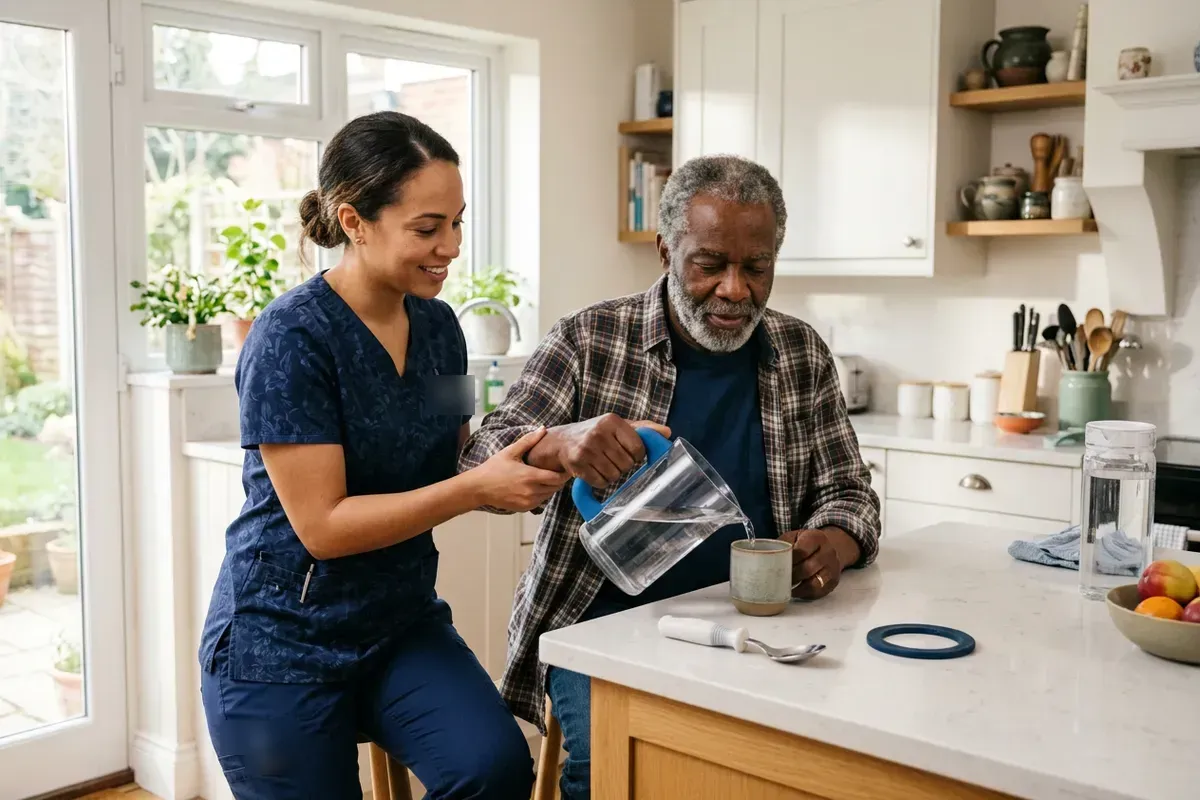
Occupational therapy helps people of all ages get back to the everyday activities that make up their lives, from buttoning a shirt after a stroke to handwriting in second grade. Here is what an occupational therapist does, how OT differs from physical therapy, and where to find OT near you in New Jersey.
“Occupational therapy” sounds like it is about jobs, but in this case “occupation” means the everyday things you need and want to do: getting dressed, cooking, bathing, working, going to school, caring for family and enjoying hobbies. The American Occupational Therapy Association describes OT as using everyday life activities to promote health, well-being and your ability to take part in the activities that matter to you (AOTA).
What Does an Occupational Therapist Do?
According to the U.S. Bureau of Labor Statistics, occupational therapists evaluate and treat people who have injuries, illnesses or disabilities, helping them develop, recover, improve and maintain the skills needed for daily living and working (BLS). Typical duties include:
- Reviewing your history, interviewing you and watching you do everyday tasks
- Building a treatment plan with specific activities aimed at your goals
- Helping you relearn daily tasks, such as teaching someone who has had a stroke how to get dressed
- Evaluating your home, school or workplace and suggesting changes that make it safer and easier to use
- Recommending equipment, such as eating aids or mobility aids, and teaching you and your family how to use it
- Teaching family members how to help
Those examples come straight from the BLS description of the profession (BLS). OT services usually include an evaluation built around your history and priorities (AOTA calls this your occupational profile), a personal intervention plan, and a check at the end to make sure the goals you set were met (AOTA).
Occupational Therapy vs. Physical Therapy
The two often work side by side. A simple way to think about it: physical therapists help injured or ill people improve movement and manage pain (BLS), while occupational therapists focus on the skills and setups you need to do daily activities on your own. After a hip replacement, for example, a PT works on walking and strength while an OT helps you get dressed safely, get in and out of the tub and set up your kitchen. MedlinePlus lists both as standard parts of rehabilitation: OT to help with daily activities and PT to help strength, mobility and fitness (MedlinePlus).
What OT Helps With: Adults
Activities of daily living (ADLs)
Bathing, dressing, grooming, eating, toileting and getting in and out of bed are called activities of daily living. OT practitioners help with ADLs, adaptive equipment such as shower chairs, caregiver training and planning daily routines (AOTA).
Stroke and other neurologic conditions
After a stroke, brain injury, MS or Parkinson’s disease, OT works on using a weaker arm and hand, coordination, and thinking skills such as memory, attention and planning (AOTA). See also our post on stroke recovery in the clinic or at home.
Hand, wrist and arm injuries
Occupational therapists treat hand and upper-limb problems such as fractures, tendon injuries, arthritis and carpal tunnel syndrome. Some go on to become Certified Hand Therapists. Read more in What Is Hand Therapy?
Home safety and fall prevention
Falls prevention, home safety and accessibility are core OT services (AOTA). An OT might suggest grab bars, a raised toilet seat, better lighting, or moving everyday items within easy reach, and may spot fall hazards and recommend removing them (BLS). Pair this with our fall prevention program and the free fall risk self-check.
Work and returning to activity
OTs help people get back to work, school and leisure activities (AOTA), and can recommend changes to a workspace or schedule (BLS).
What OT Helps With: Children
Pediatric OT builds the skills children use at home and school. The American Academy of Pediatrics notes that a child struggling with fine motor or visual-motor skills, or with self-care such as feeding themselves, picking up small objects or buttoning clothes, may benefit from occupational therapy (AAP HealthyChildren.org). Common reasons families come to us include handwriting, sensory processing differences, self-care and self-regulation. See 10 signs your child may benefit from occupational therapy.
Children are seen at the Holsman Children’s Therapy Center, 15-01 Broadway, Suite 14C, Fair Lawn, which has a sensory gym and a multi-sensory room. Children’s Center insurance: We accept commercial insurance and private pay; we do not accept Medicaid or NJ FamilyCare plans.
Who Can Practice OT?
Occupational therapists typically hold a master’s degree in occupational therapy, must pass a national exam to use the title Occupational Therapist Registered (OTR), and must be licensed in every state (BLS). They work in hospitals, schools, outpatient clinics and patients’ homes (BLS).
Get Medical Help First If
Occupational therapy is for recovery and daily function, not emergencies.
- Call 911 for sudden numbness or weakness of the face, arm or leg (especially on one side), sudden confusion or trouble speaking, sudden trouble seeing or walking, or a sudden severe headache. These can be signs of a stroke (NINDS).
- See a doctor promptly for a new injury with deformity, severe swelling or a hand you cannot move, or a wound that is red, hot, swollen or draining.
Occupational Therapy Near You: Fair Lawn and Northern New Jersey
Holsman offers adult occupational therapy at several New Jersey clinics. In Bergen County, our Fair Lawn clinic (15-01 Broadway, Suite 12) has occupational therapy on site, and children are seen in the same building at the Children’s Therapy Center (Suite 14C). Certified Hand Therapists see patients at our Rahway, Maplewood and South Orange clinics, and our therapists can also come to you with in-home occupational therapy in Northern New Jersey. Call 1-855-465-7626 and we’ll match you with the nearest clinic that has an occupational therapist.
Adult occupational therapy is also offered at our Clifton clinic, where occupational therapist Chad Vasquez, OTR/L, also sees children, at our Bloomfield clinic with Sheila Librinca, OTR/L, and at our Jersey City clinic.
You can schedule physical therapy, occupational therapy and speech therapy directly. Some insurance plans require a referral for coverage; our staff will verify your benefits for free. Learn more on our occupational therapy page.
Frequently Asked Questions
What does an occupational therapist do?
Occupational therapists evaluate and treat people with injuries, illnesses or disabilities so they can do the everyday activities they need and want to do, such as dressing, bathing, cooking, working and going to school. They teach new ways to do tasks, recommend equipment and home changes, and train family members.
What is the difference between occupational therapy and physical therapy?
Physical therapy focuses on movement, strength, balance and pain. Occupational therapy focuses on the skills and setups needed for daily activities, such as self-care, using your hands, thinking skills and home safety. Many people benefit from both.
Does occupational therapy help children?
Yes. Pediatric occupational therapy helps with fine motor skills, handwriting, self-care such as feeding and buttoning, sensory processing and self-regulation. Holsman sees children at the Holsman Children's Therapy Center in Fair Lawn.
Is there occupational therapy in Fair Lawn, NJ?
Yes. Holsman's Fair Lawn clinic at 15-01 Broadway, Suite 12 offers adult occupational therapy, and pediatric OT is in the same building at the Holsman Children's Therapy Center, Suite 14C.
Do I need a referral for occupational therapy?
You can schedule physical therapy, occupational therapy and speech therapy directly. Some insurance plans require a referral for coverage; our staff will verify your benefits for free.
Sources
- American Occupational Therapy Association (AOTA). What is occupational therapy?. Accessed November 2026.
- U.S. Bureau of Labor Statistics. Occupational Outlook Handbook: Occupational Therapists. Last modified August 27, 2026. Accessed November 2026.
- MedlinePlus, U.S. National Library of Medicine. Rehabilitation. Accessed November 2026.
- American Academy of Pediatrics, HealthyChildren.org. Is Your Baby’s Physical Development on Track?. Accessed November 2026.
- National Institute of Neurological Disorders and Stroke (NIH). Stroke: Signs and Symptoms. Accessed November 2026.
This article is for general education and isn't a substitute for an evaluation by a licensed clinician.