Regular exercise is one of the best things you can do for your heart. But if you have heart disease, high blood pressure, joint pain, or a recent health scare, knowing where to start can be hard. That is where physical therapy fits in.
Heart disease is the leading cause of death in the United States, and in 2023 cardiovascular disease accounted for about 1 in every 3 deaths (CDC, 2024). Physical inactivity is one of the risk factors the CDC lists, alongside high blood pressure, high cholesterol, smoking, diabetes, and excess weight.
Most people think of physical therapy for a sore back or a new knee. But a big part of a physical therapist's job is helping people exercise at the right dose: hard enough to make the heart and muscles stronger, and safe enough for their health conditions.
How Much Exercise Does Your Heart Need?
The CDC's guidance, based on the federal Physical Activity Guidelines for Americans, is the same baseline for adults of all ages (CDC, 2023):
- Aerobic activity: at least 150 minutes a week at moderate intensity, such as brisk walking. That can be 30 minutes a day, 5 days a week, and it can be broken into shorter bouts. Seventy-five minutes of vigorous activity, or a mix, also counts.
- Strength training: at least 2 days a week, working all major muscle groups: legs, hips, back, abdomen, chest, shoulders, and arms.
Adults 65 and older need the same aerobic and strength work, plus activities that improve balance, such as walking heel-to-toe or practicing standing up from a chair (CDC, 2025). The American Geriatrics Society adds flexibility work about 3 times a week and suggests that people at risk for falls do balance training with a trained instructor (AGS, 2026).
The American Heart Association lists lower risk of heart disease, stroke, high blood pressure, and type 2 diabetes among the benefits of regular activity. It also notes that only about one in five adults and teens get enough exercise, and it advises increasing amount and intensity gradually (AHA, 2024).
What does "moderate" feel like?
A simple check is the talk test. At moderate intensity, you breathe harder but can still talk. APTA Geriatrics describes it as about 5 to 6 on a 10-point effort scale: you can talk, but not sing (APTA Geriatrics, 2022). Its advice for older adults is "start low, go slow," then keep raising the challenge over time.
Why Older Adults Should Not Settle for "Gentle"
Aging changes the cardiovascular system. Maximum heart rate drops, arteries stiffen, and breathing muscles weaken. APTA Geriatrics notes that regular cardiovascular exercise limits these changes (APTA Geriatrics, 2022). The CDC adds that activity can prevent or delay many health problems that seem to come with age and helps older adults keep doing daily tasks independently (CDC, 2025).
Too often, older adults are handed exercises that are too easy to make a real difference. Your therapist tests your actual strength, endurance, and balance, then sets a starting level that challenges you and progresses it as you improve. If balance or falls are a concern, this can be combined with our fall prevention program, including the No Fall Protocol®, offered at all of our adult clinics.
How Physical Therapy Helps You Exercise Safely
A starting point based on testing, not guessing
Your first visit includes a review of your health history and medicines, plus tests of strength, walking, balance, and endurance. Your therapist also asks about any exercise limits from your doctor or cardiologist and builds the plan around them.
Monitoring how your body responds
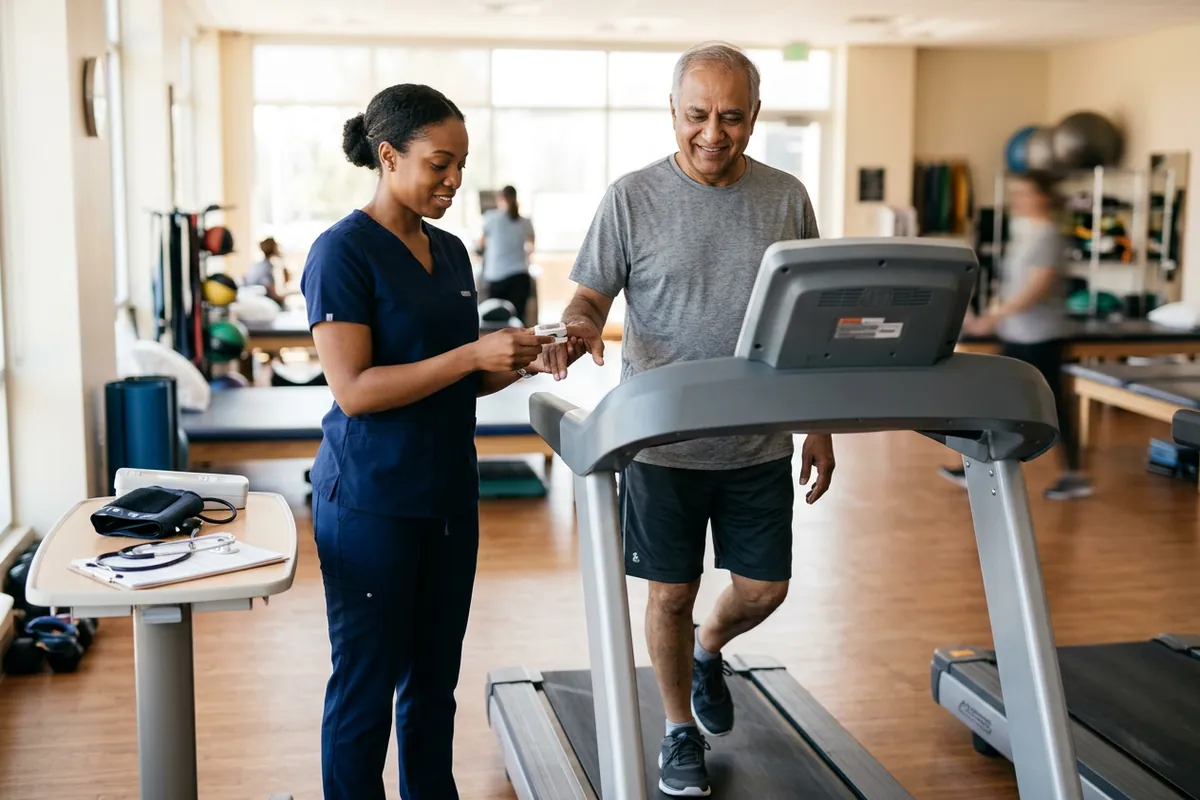
Depending on your condition, your therapist may check your blood pressure, heart rate, oxygen level, and breathing before, during, and after exercise, along with how hard the work feels to you. This shows how your heart responds to effort, which helps you learn what a safe, effective workout feels like on your own.
Working around pain
Knee arthritis, back pain, or an old injury stops many people from walking or cycling regularly. Treating the pain and choosing lower-impact options keeps the aerobic work going. At our Fair Lawn adult clinic, the AlterG anti-gravity treadmill can reduce the load on painful joints during walking.
A plan you can keep doing
Your therapist will help you build a home and community routine that meets the weekly guidelines as closely as your health allows.
Exercising With Heart Conditions
High blood pressure
High blood pressure is a key risk factor for heart disease (CDC, 2024), and regular activity is linked with lower risk of developing it (AHA, 2024). Exercise does not replace your medicines. Some blood pressure medicines can also cause lightheadedness, especially when you stand up quickly. Tell your therapist what you take so the plan and your warm-up and cool-down account for it.
After a heart attack, heart surgery, or a heart failure diagnosis
Formal cardiac rehabilitation is the right first step for many people. The American Heart Association describes it as a medically supervised program for people who have had a heart attack, heart failure, angioplasty, or heart surgery, combining exercise training, education, and stress counseling (AHA, 2024). Holsman does not run a formal cardiac rehab program. If you may qualify, ask your cardiologist for a referral to one.
Once you have been cleared by your cardiologist, or after you finish cardiac rehab, physical therapy can help you keep building strength, endurance, and balance, and treat the joint pain or deconditioning that can make daily activity hard.
The stroke connection
Heart disease and stroke share many of the same risk factors, and regular activity is linked with lower risk of both (AHA, 2024). If you or a family member is recovering from a stroke, read our guide to stroke recovery in outpatient vs. in-home therapy.
When to Stop and Call 911
Stop exercising and call 911 if you have any of these warning signs (AHA, 2024):
- Chest discomfort: pressure, squeezing, fullness, or pain, or discomfort that goes away and comes back
- Pain or discomfort in one or both arms, the back, neck, jaw, or stomach
- Shortness of breath, with or without chest discomfort
- A cold sweat, nausea, or lightheadedness
- A rapid or irregular heartbeat, or unusual tiredness
- Stroke signs: face drooping, arm or leg weakness, trouble speaking, sudden vision changes, or loss of balance
Women may also have less typical symptoms, such as shortness of breath, nausea, vomiting, or shoulder, back, or arm pain (AHA, 2024). Don't wait to see if symptoms pass. For new or worsening symptoms that are not an emergency, like more breathlessness than usual or swelling in your legs, contact your doctor before your next session.
Getting Started at Holsman
You can schedule physical therapy, occupational therapy and speech therapy directly. Some insurance plans require a referral for coverage; our staff will verify your benefits. See our insurance page for details.
We have 17 clinics across New Jersey and New York, including Lyndhurst, Fair Lawn, Newark, and the Bronx. If getting to a clinic is hard, ask about in-home therapy in Northern New Jersey; in New York, in-home care is provided by our sister practice, Home Therapy PT. Call 1-855-465-7626 or contact us.
Frequently Asked Questions
How much exercise do adults need for heart health?
The CDC and American Heart Association recommend at least 150 minutes a week of moderate-intensity aerobic activity, such as brisk walking, plus muscle-strengthening activity on at least 2 days a week. Adults 65 and older should also include balance activities. If you can't reach that yet, any amount of activity is better than none.
Is it safe to exercise if I have heart disease or high blood pressure?
For most people, yes, and regular activity is part of managing both conditions. Talk with your doctor or cardiologist first, ask about any limits, and start low and build gradually. A physical therapist can check your blood pressure and heart rate during exercise and adjust the plan.
Is Holsman a cardiac rehab program?
No. Holsman does not run a formal cardiac rehabilitation program. If you have had a heart attack, heart surgery, a stent or angioplasty, or have heart failure, ask your cardiologist about cardiac rehab first. Once you are cleared by your cardiologist or have finished cardiac rehab, physical therapy can help you keep building strength, endurance, and balance.
What does a physical therapist monitor during exercise?
Depending on your health, your therapist may check blood pressure, heart rate, oxygen level, breathing, and how hard the exercise feels to you, before, during, and after activity. Your therapist follows any exercise limits your physician has given you and adjusts the plan based on how your body responds.
When should I stop exercising and get help?
Stop and call 911 for chest pain, pressure, or squeezing; pain spreading to the arm, back, neck, jaw, or stomach; shortness of breath that doesn't ease with rest; a cold sweat, nausea, or lightheadedness; a racing or irregular heartbeat; or any stroke signs such as face drooping, arm weakness, or trouble speaking.
Do I need a referral for physical therapy?
You can schedule physical therapy, occupational therapy and speech therapy directly. Some insurance plans require a referral for coverage; our staff will verify your benefits.
Sources
- Centers for Disease Control and Prevention (CDC). Adult Activity: An Overview. 2023.
- Centers for Disease Control and Prevention (CDC). Older Adult Activity: An Overview. 2025.
- Centers for Disease Control and Prevention (CDC). Heart Disease Facts. 2024.
- American Heart Association. American Heart Association Recommendations for Physical Activity in Adults and Kids. 2024.
- American Heart Association. What Is Cardiac Rehabilitation?. 2024.
- American Heart Association. Warning Signs of a Heart Attack. 2024.
- American Geriatrics Society, HealthInAging.org. Physical Activity: Lifestyle and Management. 2026.
- APTA Geriatrics, Academy of Geriatric Physical Therapy. Maintaining Cardiovascular Fitness as We Get Older (patient handout). 2022.
This article is for general education and isn't a substitute for an evaluation by a licensed clinician.